Compare the role of websites and social media to understand how each can help your Australian business grow online.
Australian businesses have more digital marketing options than ever.
You can create an Instagram profile, build a Facebook page, post videos, run advertisements, create a Google Business Profile, or launch a professional website.
But if you had to choose between a website and social media, which should you focus on?
The answer depends on your business, audience, budget, and goals. More importantly, websites and social media aren’t necessarily competitors. They can work together as part of a broader digital presence.
What Does Social Media Do Best?
Social media is designed for interaction.
Platforms such as Instagram and Facebook allow businesses to share updates, photos, videos, offers, customer stories, educational content, and behind-the-scenes material.
Social media can be particularly useful for businesses that benefit from visual content.
For example:
- Builders can showcase completed projects.
- Restaurants can share food photography.
- Landscapers can post before-and-after transformations.
- Retail businesses can showcase new products.
- Designers can share portfolios.
Social media can help businesses build awareness and engage with existing and potential customers.
What Does a Website Do Best?
A website provides a dedicated online home for your business.
Unlike a social media profile, you control the structure and information displayed on your website.
You can create dedicated pages for your services, products, locations, portfolio, testimonials, FAQs, pricing, contact information, and other important content.
A website also gives you more control over the customer journey.
You can guide visitors from an introduction to detailed service information and finally toward an enquiry or purchase.
Social Media Isn't a Replacement for a Website
Imagine discovering a business on Instagram.
You like their work and want to learn more.
You may then look for their website to check:
- Services
- Reviews
- Experience
- Previous projects
- Locations
- Contact information
- Pricing
- Business details
If there is no website, the customer may still contact the business, but they have fewer places to verify information.
For some businesses, this may not be a major issue. For others, especially businesses selling higher-value services, having a professional website can provide additional information and credibility.
Websites Can Support Google Search
Another major difference is search visibility.
A website can contain multiple pages targeting different services, topics, and locations.
For example, a Sydney plumbing business might have individual pages explaining hot water services, blocked drains, emergency plumbing, and other relevant services.
These pages can provide search engines with more information about the business.
Social media content can also appear in search results in some circumstances, but a website provides much more control over the structure and depth of your content.
Websites Give You More Branding Control
Social media platforms have their own layouts and limitations.
Your website doesn’t have to follow the same structure.
You can build the visual experience around your brand.
This includes:
- Colours
- Typography
- Layout
- Images
- Navigation
- Animations
- Content
- Calls to action
- Product presentation
A professional website can therefore become a central part of your brand identity.
Social Media Can Drive Website Traffic
The strongest approach for many businesses isn’t choosing one.
Use social media to attract attention and your website to provide deeper information.
For example, an Instagram post can showcase a completed project and direct interested users to the relevant project or service page on your website.
A Facebook post can promote a new service and link visitors to an enquiry form.
An advertisement can send potential customers directly to a landing page designed around a specific offer.
Each channel can support the other.
What About Small Businesses?
Small businesses often have limited time and marketing budgets.
That makes prioritisation important.
If your business is still developing its online presence, consider what customers need from you.
If most of your business comes from personal recommendations and you only need a basic online presence, social media may provide useful initial visibility.
If you want to build long-term search visibility, generate enquiries, sell products, establish credibility, or create a central destination for customers, a website may become increasingly valuable.
Which Should You Invest In?
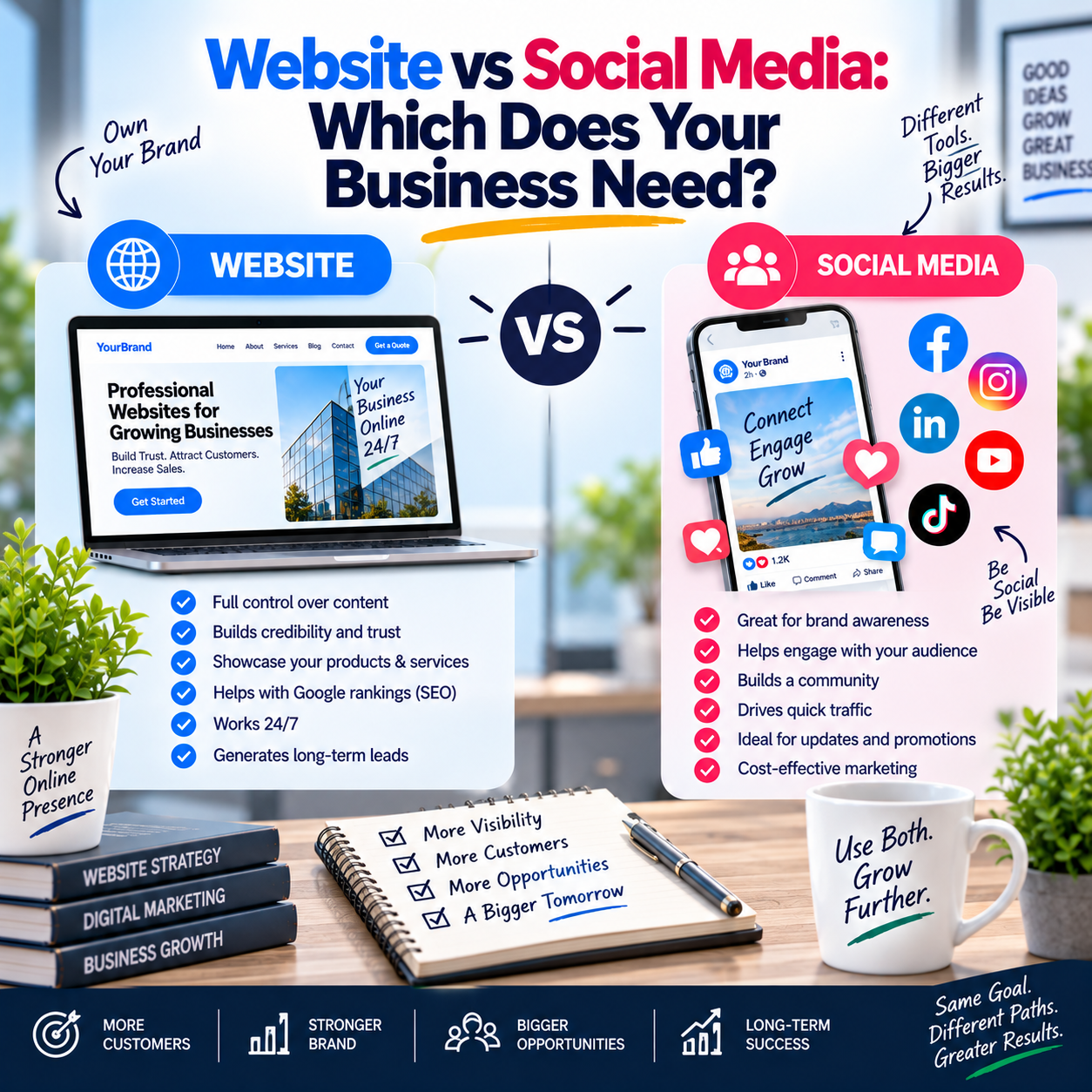
Instead of thinking about websites versus social media, think about their different roles.
Social media:
Builds awareness, engagement, community, and ongoing content.
Website:
Provides information, credibility, search visibility, branding, enquiries, and ecommerce functionality.
Neither channel guarantees customers.
The effectiveness of each depends on your strategy, audience, content, execution, and business offering.
Final Thoughts
For many Australian businesses, the best digital strategy isn’t choosing between a website and social media.
It’s creating a website that acts as the foundation of your online presence while using social media to attract attention and engage your audience.
Your social profiles can introduce your business. Your website can tell the full story.
At Web7 Solutions, we help Australian businesses build modern, responsive websites designed to work alongside their digital marketing efforts and provide customers with a professional place to learn, connect, enquire, or shop.